If you've spent time doing web scraping, managing social media accounts, or verifying ads, you've almost certainly hit a wall: your requests get blocked, your accounts get flagged, or your ad verification data comes back wrong. The root cause is usually the same — you're coming from an IP address that doesn't look like a real user.
Mobile proxies solve this problem at the hardware level. This guide explains what they are, how they work, why UK mobile IPs are a different category from residential or datacentre proxies, and when you actually need them.
What Is a Proxy?
Before diving into mobile proxies specifically, a quick level-set. A proxy server sits between your device and the websites you're visiting. When you use a proxy, your request goes: your device → proxy → target website. The target website sees the proxy's IP address, not yours.
Proxies vary enormously in quality depending on where their IP addresses come from.
| Proxy Type | IP Source | Detection Risk | Use Case |
|---|---|---|---|
| Datacentre | Cloud servers (AWS, DigitalOcean, etc.) | Very high | Speed, volume, basic tasks |
| Residential | Home broadband connections | Medium | General scraping, geo-restriction bypass |
| Mobile | Real mobile network SIM cards | Low | High-trust tasks, anti-bot bypass |
Each step up this table represents an IP that looks more like a genuine human user — and is harder for anti-bot systems to flag.
What Are Mobile Proxies?
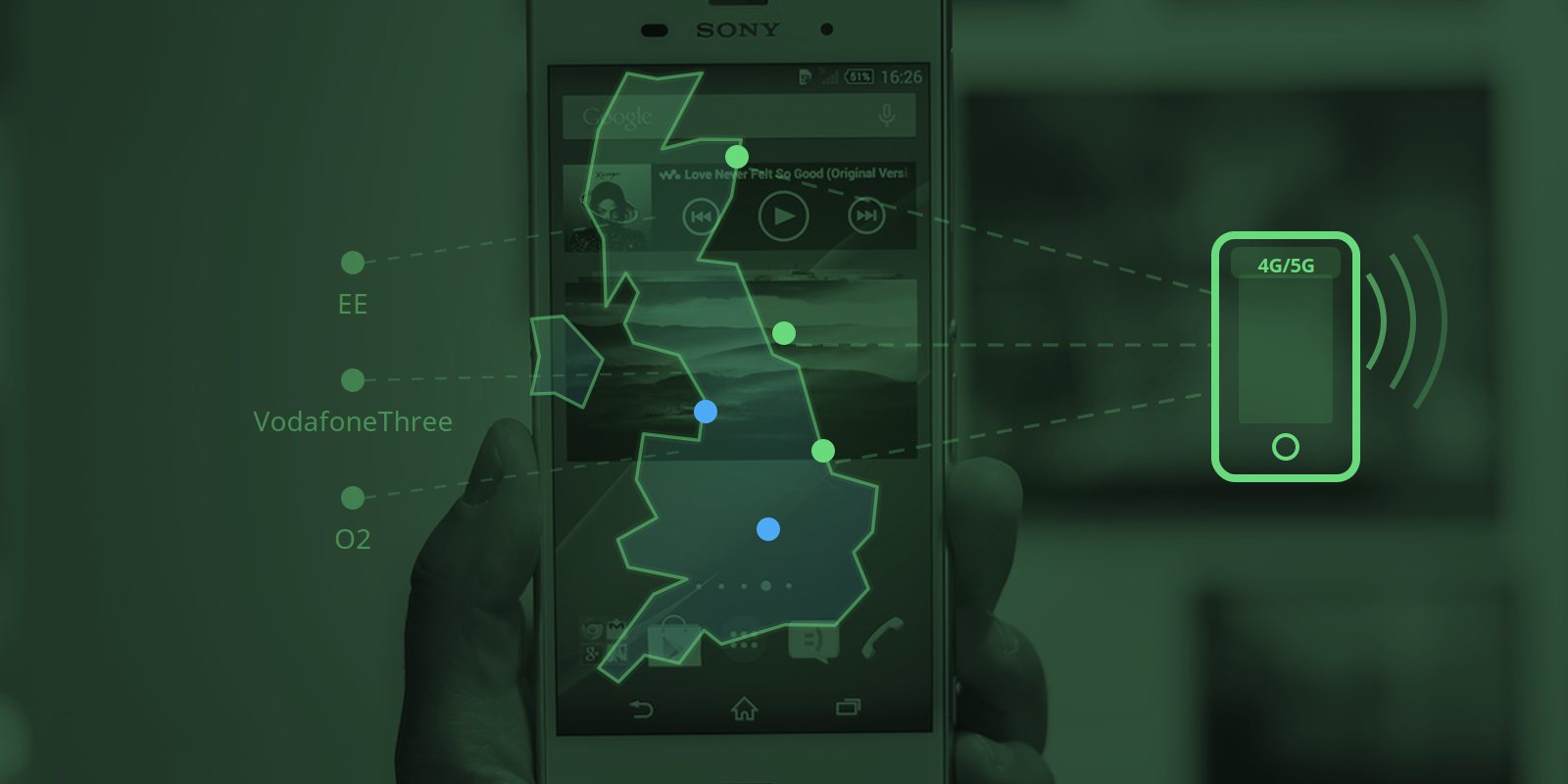
A mobile proxy routes your traffic through a real SIM card connected to a real mobile network (4G or 5G). The IP address you appear to use belongs to a block assigned to that mobile carrier — the same IP range shared by real smartphone users in that country.
The key distinction: carrier-grade NAT
Mobile networks use a technology called Carrier-Grade NAT (CGNAT). Unlike your home broadband, which gives you a single dedicated IP, mobile networks share IP addresses across thousands of devices simultaneously. A single mobile IP might be used by hundreds of real users at any given moment.
This is why mobile IPs are so hard to block without collateral damage. When a website sees a suspicious request from a mobile IP and blocks it, it risks blocking hundreds of legitimate smartphone users on the same network. Most websites simply don't take that risk.
This structural property — shared, legitimate, constantly rotating — makes mobile IPs the highest-trust category in the proxy market.
How mobile proxy services work
There are two fundamentally different architectures:
Pooled/SDK mobile proxies (most providers)
Large providers like Bright Data, Decodo, and SOAX aggregate mobile IPs from a network of real devices — often through an SDK installed on users' phones in exchange for payment or premium app features. Your traffic is routed through whichever device happens to be available in their pool. You're one of many customers sharing those IPs.
Dedicated hardware mobile proxies (Simply Proxies)
A smaller number of providers operate actual physical devices — real phones on real SIM cards — and route customer traffic through those dedicated connections. You get a genuine mobile connection from a specific carrier, not a slice of a shared pool.
The dedicated model provides cleaner IPs, more consistent geolocation, and a genuine connection profile that's indistinguishable from a real UK smartphone user.
Why UK Mobile Proxies Specifically?
Geography matters enormously in proxy use cases. Here's why UK mobile IPs are a distinct product category:
1. UK-specific content and geo-restrictions
A significant portion of the web serves different content based on your location. UK-specific pricing, UK-only streaming content, UK search engine results (Google.co.uk, Bing UK), and UK-targeted advertising all require a UK IP to access authentically. A proxy based in Germany or the US — even a high-quality mobile one — simply won't return the right data.
2. UK mobile carrier IP ranges carry high trust scores
UK mobile carriers have well-established IP reputations. Anti-bot systems that score IPs on trust signals assign high scores to UK mobile network ranges because they see enormous volumes of legitimate human traffic from UK mobile networks every day. UK mobile IPs from major carriers are among the most trusted on the internet.
3. The UK internet landscape is mature and monitored
Brands, agencies, and compliance teams monitoring UK online activity — from ad placements to price comparisons to SERP results — need to see the web from a UK mobile perspective to get accurate data. A UK desktop IP won't show mobile-specific ad placements. A non-UK IP won't show geo-restricted content at all.
4. UK mobile IPs are genuinely scarce
The UK has a relatively small number of mobile IP ranges compared to the sheer demand from global clients wanting UK data. This scarcity means UK mobile proxies command a premium — and it means genuine UK mobile IPs (not datacentre IPs spoofed with UK geolocation data) are valuable and relatively rare.
The Five Main Use Cases for UK Mobile Proxies
1. Web Scraping and Data Extraction
Web scraping at scale almost always results in IP blocks. Datacentre IPs are the easiest to block — they show obvious patterns (same ASN, sequential IPs, no mobile fingerprint). Residential IPs are better but can still be identified by browser fingerprint or IP reputation scoring.
UK mobile proxies excel at web scraping for UK-specific data: e-commerce pricing, property listings, job boards, news aggregation, and SERP data. The CGNAT property means your scraper appears to be one of thousands of legitimate UK smartphone users, not a bot farm.
When to use UK mobile proxies for scraping: High-value targets with aggressive anti-bot protection; UK-specific data sources; tasks where data quality (not just volume) matters.
2. Ad Verification
If you run digital advertising campaigns targeting UK mobile users, you need to verify that your ads are actually displaying correctly — on the right placements, with the right creative, in the right geographic region.
Verifying from a datacentre IP will show you a different view than a real UK mobile user sees. Some ad fraud systems specifically serve clean content to datacentre IPs (a technique called "cloaking") while serving fraudulent placements to real users. Only a genuine UK mobile IP lets you see what real UK mobile users are actually seeing.
This use case has essentially no substitute. If you're paying for UK mobile ad placements, you need to verify from UK mobile IPs.
3. Social Media Account Management
Social media platforms — Instagram, TikTok, X, LinkedIn — use IP signals as one of many trust indicators for account authenticity. Running UK business accounts or managing UK influencer profiles from datacentre IPs is a quick way to trigger trust reviews or permanent bans.
UK mobile IPs provide the appearance of a genuine UK smartphone user, which is exactly what platforms expect when a UK account is accessed. For agencies managing multiple UK client accounts, dedicated UK mobile proxies are the professional-grade solution.
4. SEO Monitoring
Google and Bing serve personalised, localised search results. If you're tracking keyword rankings for UK clients, running your rank tracker from a datacentre IP in the Netherlands will give you inaccurate results. UK mobile proxies let you see exactly what UK mobile users see on Google.co.uk — the device type (mobile), the location (UK), and the carrier are all reflected in the IP, giving you the most accurate possible picture of UK mobile SERPs.
5. Brand Protection and Price Monitoring
Luxury brands, retailers, and e-commerce businesses monitor the UK web for counterfeit listings, MAP pricing violations, and unauthorised resellers. This monitoring requires checking UK-specific marketplaces, comparison sites, and local retailer websites from a UK perspective. UK mobile IPs provide both the correct geographic view and the lowest detection risk.
What to Look For in a UK Mobile Proxy Provider
Not all mobile proxy services are equivalent. Here's what to evaluate:
Real mobile hardware vs. SDK pools
Ask directly: are the IPs from real SIM cards on real devices, or from an SDK installed on users' phones? Dedicated hardware provides more consistent IPs and a cleaner connection profile.
Genuine UK mobile networks
Confirm the provider uses genuine UK mobile network SIM cards, not repackaged MVNO IP ranges that carry lower trust scores. The tier and independence of the carrier matters for IP reputation.
Protocol support
HTTP and SOCKS5 are both needed for different use cases. SOCKS5 is required for non-HTTP protocols and provides more flexibility. Confirm both are supported.
Pricing model
Mobile proxies are priced per GB (pay-as-you-go) or as monthly unlimited subscriptions. PAYG gives better control for variable workloads. At the current market rate, expect to pay $2–8/GB for legitimate mobile proxy traffic from dedicated hardware.
Transparency
Providers who explain their infrastructure, acknowledge limitations, and publish their carrier mix are more trustworthy than those who just list "millions of mobile IPs" with no detail.
Common Misconceptions About Mobile Proxies
"Any UK IP will do."
No. A UK datacentre IP and a UK mobile IP are detectably different. The ASN (autonomous system number) identifies whether an IP belongs to a cloud provider, an ISP, or a mobile carrier. Anti-bot systems check this.
"Mobile proxies are overkill for most tasks."
For basic, low-volume tasks on sites without anti-bot protection — maybe. But for anything requiring UK mobile accuracy, high-trust appearance, or resistance to sophisticated detection, mobile proxies are the right tool, not an over-specified one.
"Shared mobile proxy pools are as good as dedicated hardware."
Shared pools have more IP diversity, but dedicated hardware gives you a clean connection profile — one device, one carrier, one consistent IP rotation. For use cases requiring authentication or long-session consistency, dedicated beats shared.
Summary
Mobile proxies route traffic through real SIM cards on real mobile networks. UK mobile proxies specifically use UK carrier IP ranges — the same blocks used by millions of genuine UK smartphone users — making them the highest-trust proxy category for UK-specific work.
The five core use cases are: web scraping, ad verification, social media account management, SEO monitoring, and brand protection.
When choosing a provider, prioritise: genuine UK carriers, real hardware (not just SDK pools), SOCKS5 + HTTP support, and transparent pricing.
Try UK Mobile Proxies Free
Get 500 MB free on Simply Proxies. Real devices, genuine UK mobile connections, HTTP + SOCKS5.
Start Free Trial